=
Message from the President & Executive Director
In 2024, Doctors Without Borders/Médecins Sans Frontières (MSF) teams worked in over 75 countries, providing emergency medical assistance to people affected by conflict, displacement, disaster and lack of access to healthcare. Amid overwhelming medical needs and dwindling respect for International Humanitarian Law, we saw people – including our supporters in Canada and around the world – come together in solidarity with those facing crises. Thank you for your generosity and commitment to our work
Separated by thousands of kilometres, our teams in Palestine and Sudan bore witness to the devastating impact of armed conflict on civilian lives. In both contexts, people were confronted with unrelenting onslaught: children were starved through blockades, bombs were dropped on civilian populated areas and bullets were fired into hospitals.
In Gaza, Israeli forces unleashed an intensive campaign of airstrikes and ground incursions, obliterating entire neighbourhoods. Our colleagues, many of whom were affected by the crisis themselves, treated thousands of patients for war wounds and psychological trauma, while continuing to care for pregnant women and children. MSF’s ability to scale up was severely hindered by the Israeli imposed siege and repeated obstruction of humanitarian aid, which included routinely blocking medication and medical supplies from entering Gaza. At the time of writing, 12 MSF colleagues have been killed since the start of the war. We are outraged and condemn the repeated killing of our staff in the strongest possible terms.
Farther away from mainstream Canadian headlines, a catastrophic humanitarian crisis continued in Sudan as the conflict entered its second year. Fighting between the Sudanese Armed Forces and Rapid Support Forces continued across large parts of the country. Bureaucracy and security restrictions complicated MSF’s ability to provide assistance, and we were unable to respond on the scale the immense needs of people demanded. The absence of other international organizations and a lack of aid in many areas meant that people’s needs in some situations of mass displacement, famine and violence were severely underserved or unmet.
Our teams in Sudan and in neighbouring Chad and South Sudan – where many Sudanese have sought refuge – treated patients for trauma injuries caused by explosions, as well as horrific sexual violence and diseases like cholera, malaria and hepatitis.
In Myanmar, the conflict in Rakhine state continued to cause widespread displacement and suffering, yet drew almost no international attention. Lives and property were deliberately destroyed, and many people were forcibly recruited into military service. Despite restrictions on our operations and repeated attacks on our facilities, we worked to continue delivering care, adopting alternative strategies like teleconsultations.
Sexual violence remained prevalent in many of the places where we worked, especially in conflict settings. In Democratic Republic of Congo (DRC), the numbers were staggering. Our teams treated more than 25,000 survivors of sexual violence in 2023 – an average of two every hour – across five provinces. This trend worsened in 2024; in displacement sites around Goma, North Kivu province, we treated almost 17,500 patients in the first five months alone.
Throughout the year, MSF continued supporting people on the move, as globally the number of forcibly displaced people reached a record level high. Our teams in Panama, Costa Rica, Honduras, Guatemala, Mexico and the United States provided essential medical and psychosocial care for people who faced critical levels of mental and physical abuse, including sexual violence, along the Latin American migration routes. We responded to the needs of people displaced by war and violence in places including DRC, Mali, Mozambique and South Sudan.
In 2024 we saw a significant rise in security incidents affecting our staff, facilities and infrastructure. This reflected our operations’ closer proximity to frontlines in armed conflicts, and of the volatile security situation in many of the places where we work, such as DRC, Haiti, Palestine and Sudan. Some of these events – shootings, explosions, raids on our facilities, attacks on our ambulances – forced us to suspend some medical activities during the year.
These decisions are never taken lightly. Ultimately, it is the local communities who lose access to critically needed healthcare.
These incidents were not isolated to MSF; they reflected broader patterns of impunity where state and non-state armed groups flagrantly violated International Humanitarian Law, which is meant to protect medical workers and infrastructure.
At the same time, funding for humanitarian aid saw further cuts in 2024, widening gaps in the availability of health services. Thanks to our independent funding model – where 97.9 per cent of last year’s funding came from private supporters – MSF was not directly affected by these cuts. However, we remained deeply concerned about the impact they will have on the communities we work with and assist.
At this critical juncture for humanitarianism, when global solidarity seems to be waning, we want to thank you for your ongoing commitment. The dedication of our staff, the trust of our patients and the support of our donors means that MSF can provide relief to communities caught in crisis.
Behind every IV placed in a cholera ward, each mosquito net distributed to displaced families and every pill dispensed to treat tuberculosis is a movement of people acting together in defiance of a status quo that accepts apathy and human suffering. Thank you for being part of our humanitarian action.
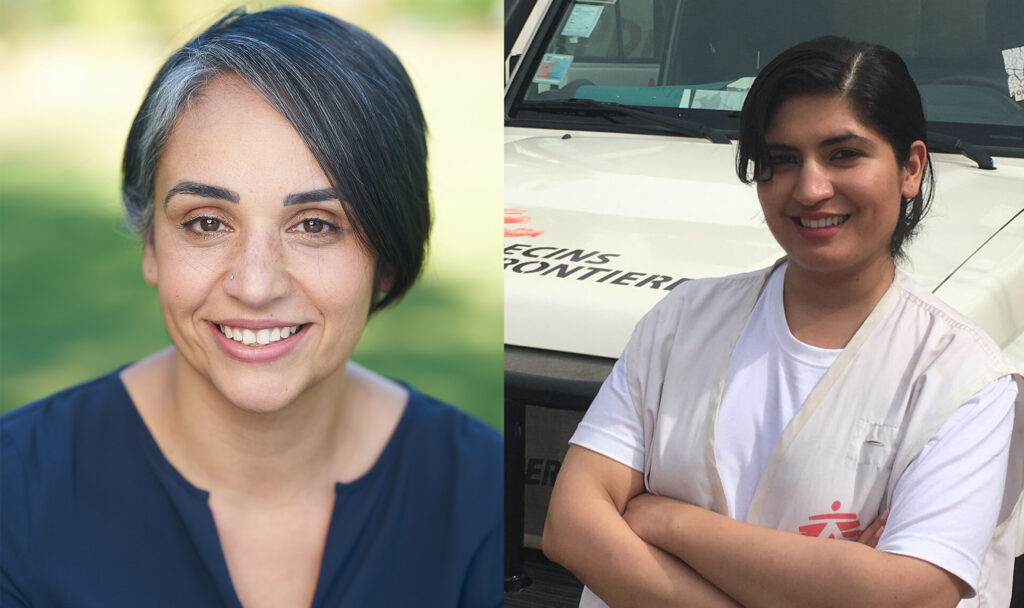
Ruby Gill | Outgoing President,
Sana Bég | Executive Director