MSF in action: Country profiles
KEY MEDICAL FIGURES:
4,660
people treated for sexual violence
13,168,000
litres of chlorinated water distributed
9,750
surgical interventions
Violence reached new levels in Haiti in 2024, as armed groups intensified their attacks on civilians, public institutions and utilities, disrupting essential services and leaving millions struggling to meet their basic needs. Doctors Without Borders/Médecins Sans Frontières (MSF) delivered lifesaving treatment for trauma and burns, care for survivors of sexual violence and maternal and neonatal care.
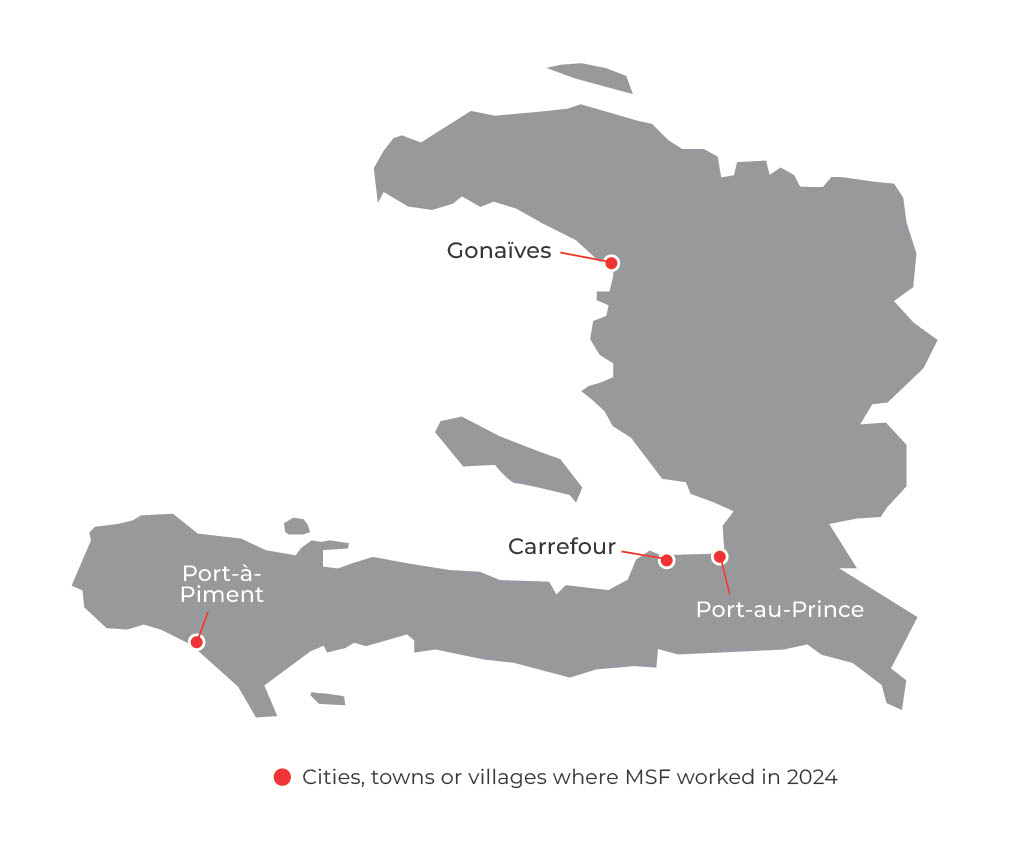
Between February and April, the monthly number of patients arriving with gunshot wounds at MSF’s Tabarre trauma hospital surged from 60 to 100. We expanded bed capacity from 50 to 75 to meet the demand for surgery. In March, MSF opened the Sant MSF pou Blese trauma centre in Carrefour, Port-au-Prince, to treat victims of gunshots, stabbings, burns and road accidents, and re-opened the Turgeau emergency centre, closed in December 2023 after a fatal attack.
The increased violence forced one million people from their homes. Many live in informal sites with inadequate water and sanitation. MSF distributed clean water in 15 sites and constructed latrines and showers, while our mobile clinics treated people suffering from diarrhea and scabies. The maternal mortality rate in Haiti remains high. MSF supported mothers with emergency obstetric and neonatal services at Port-à-Piment and began rehabilitating the Isaïe Jeanty maternity hospital in Port-au-Prince. The hospital will offer free maternal care, reproductive health services and support for survivors of sexual and gender-based violence (SGBV).
Increased SGBV has left survivors in urgent need of shelter, mental health support and medical care. MSF teams provided comprehensive care at the Pran Men’m clinic, Carrefour maternity hospital, and started a new program in Cité Soleil.Violence and insecurity forced several major hospitals in Port-au-Prince to close. Our teams faced security threats and incidents. On Nov. 11, two patients were killed and staff assaulted during an attack on an ambulance. We suspended most activities in the capital on Nov. 20, resuming some on Dec. 11