MSF in action: Country profiles
KEY MEDICAL FIGURES
2,285,100
outpatient consultations
843,300
vaccinations against measles in response to an outbreak
19,700
children admitted to inpatient feeding programs
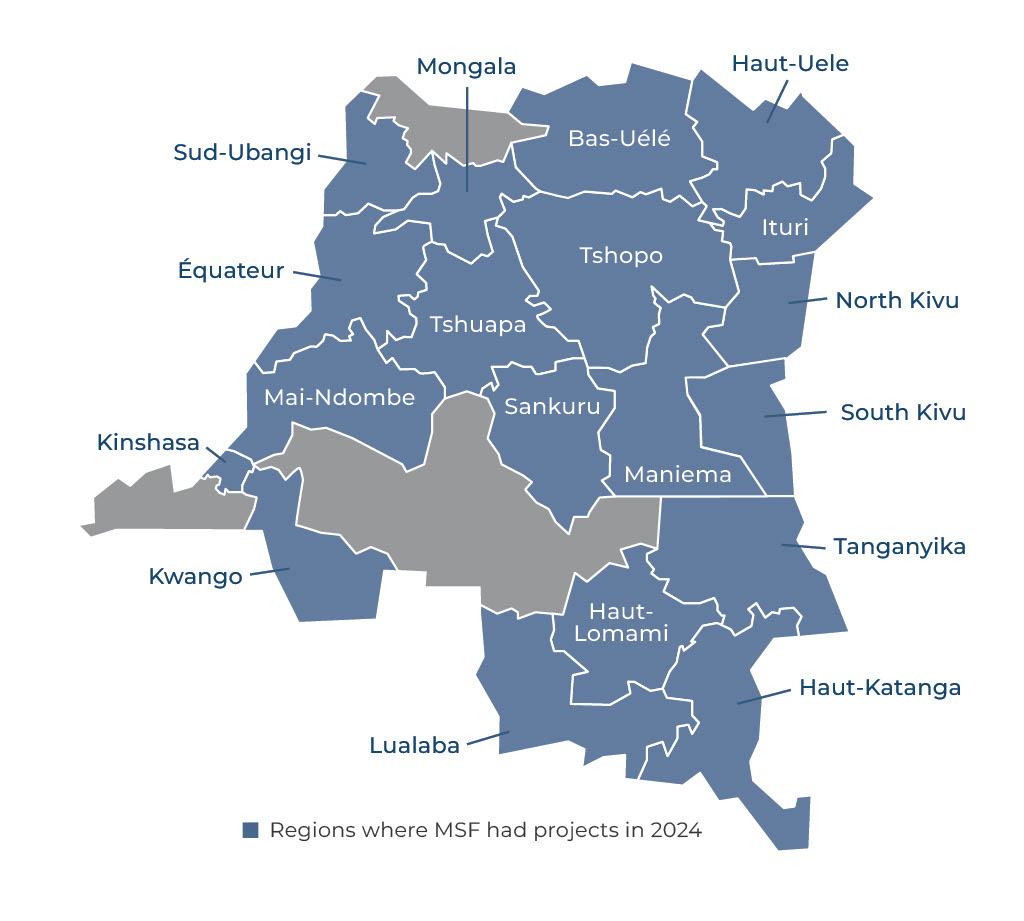
Escalated conflict between the Congolese armed forces and armed groups resulted in immense humanitarian needs in 2024. Doctors Without Borders/Médecins Sans Frontières (MSF) provided vital support to people, running regular and emergency projects throughout the country.
Lack of national and international action contributed to deteriorating living conditions in already overcrowded displacement camps around Goma, North Kivu. MSF scaled up our emergency response, strengthening general, maternal and pediatric care, delivering lifesaving vaccinations and treating an unprecedented number of survivors of sexual violence. We were the primary water provider in the camps, installing a solar-powered water supply, and built sanitation infrastructure.
Teams ran mobile clinics to reach people impacted by fighting and repeated displacement in both North and South Kivu. In South Kivu, MSF launched an emergency intervention delivering medical care to people who are sick and injured and improving hygiene conditions in camps.
In Ituri province, civilians suffered widespread attacks by armed groups. MSF continued to support Salama clinic in Bunia, providing surgery and post-surgical care, including physiotherapy and mental health support for patients suffering from trauma. We trained staff and helped 13 health zones prepare for mass-casualty events. MSF also supported the general hospitals in Angumu and Drodro.
Emergency teams responded to measles epidemics and a surge in mpox outbreaks. We conducted epidemiological surveillance, awareness and research activities in nine provinces and supported the health ministry with patient care.
Ongoing projects across the country supported health facilities and trained community health workers to detect high prevalence conditions such as malaria and malnutrition, particularly in remote areas. In the capital, Kinshasa, teams provided clean water and medical care after severe flooding in January. MSF continued to offer HIV care in the Kabinda hospital and five health centres. Sexual violence continues to be a critical concern. Teams provided care to 46,900 survivors of sexual violence with medical treatment, psychological support and promoted community awareness.