MSF in action: Country profiles
KEY MEDICAL FIGURES
601,400
outpatient consultations
67,500
vaccinations against measles in response to an outbreak
402,932,000
litres of chlorinated water distributed
In 2024, Doctors Without Borders/Médecins Sans Frontières (MSF) scaled up our activities to assist some of the 700,000 refugees and returnees in eastern Chad who fled the war in Sudan.
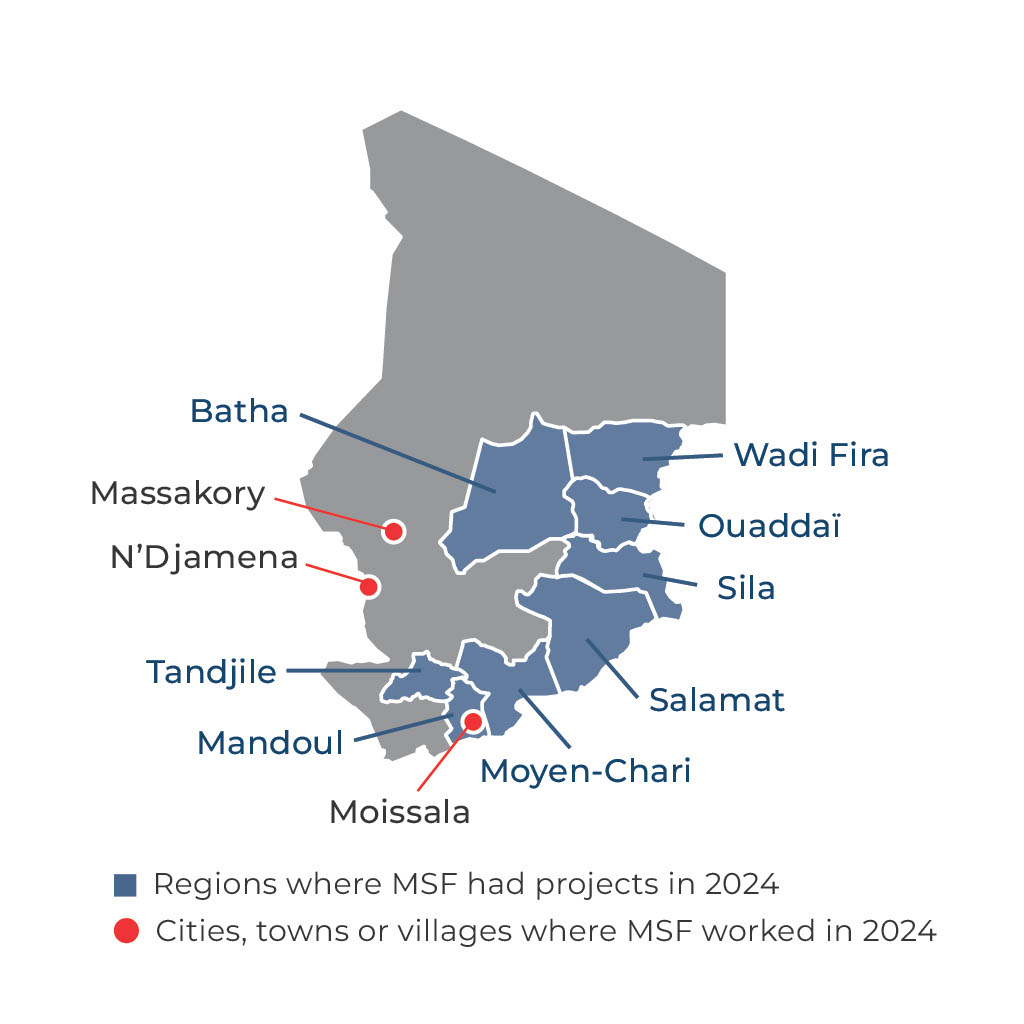
In Ouaddai, Sila and Wadi Fira, MSF ran health and sanitation projects to respond to the immediate and growing needs of people living in the camps and local communities. Our teams provided basic, specialist and community healthcare in the Adré transit camp, the refugee camps of Aboutengue, Metché and Iriba, as well as in Kimiti province.
MSF built field hospitals in the Metché and Aboutengue camps so patients could access vital medical care, including emergency, pediatric, neonatal and sexual and reproductive care. We also set up an operating theatre for emergency surgery in Metché. In all our projects, we aimed to strengthen pediatric care, in particular the treatment of malnutrition and seasonal malaria.
Our teams also carried out extensive work to improve water and sanitation facilities in villages and refugee camps by constructing boreholes, latrines and showers and distributing water
In Moissala, MSF continued to partner with the Ministry of Health to improve access to obstetric and maternal healthcare and services for children. In the capital N’Djamena, MSF collaborated with the ministry on a malnutrition project, supporting five outpatient therapeutic feeding centres and a hospital.
Devastating floods affected all 23 provinces of Chad in 2024. Together with the Ministry of Health, MSF responded to people’s most immediate needs. Teams also supported routine and emergency vaccination campaigns country-wide, notably against measles, and responded to a diphtheria resurgence in Batha region.
To improve access to care and early treatment, MSF promoted a communal approach to disease awareness and prevention in several of our projects. In Sila, we continued developing a community-based healthcare network across 91 villages.